The Truth About Sugar
Crystalized Satan and the Stuff That Pretends to Be Better
I call regular white processed sugar “crystalized Satan“. Not because I’m dramatic (okay, maybe a little), but because once you start really looking at ingredient lists, it’s everywhere—and it does more damage than most of us want to admit. Salad dressing. Peanut butter. Bread. Yogurt. That “healthy” protein bar. Ketchup. It’s sneaky, and the food industry has gotten very good at hiding it under names that sound almost wholesome.
Then there are the substitutes. Some of them sound natural. Some of them are marketed like they’re doing you a favor. Most of them still come with their own problems. I’ve spent a lot of time reading labels and trying to figure out what’s actually in the stuff I put in my coffee or use when I bake, so I figured I’d share what I’ve learned in plain language.
The Ones That Are Basically Just Sugar
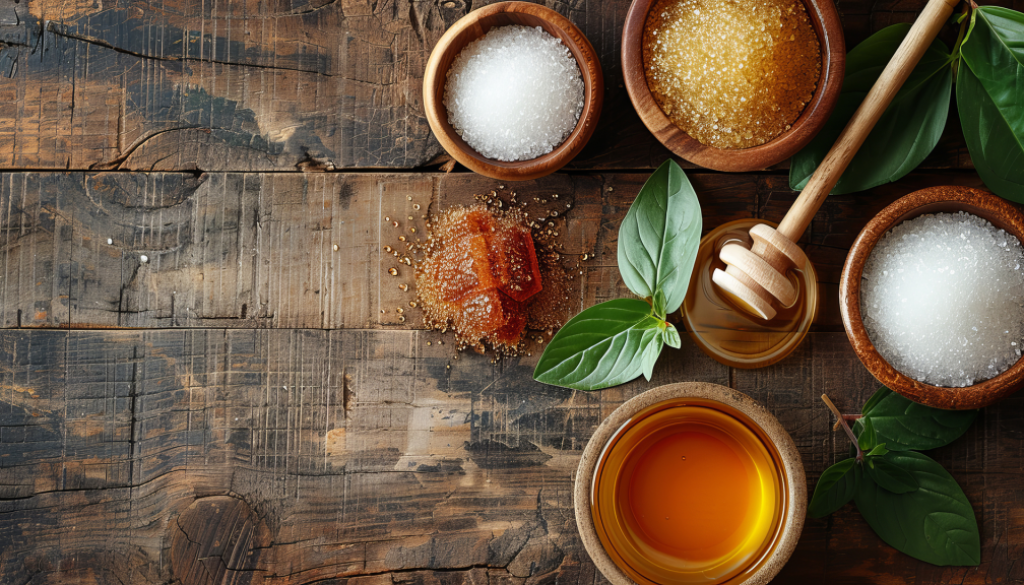
Regular table sugar (the white stuff in the bag) comes from either sugarcane or sugar beets. They crush it, pull out the juice, clean it up, boil it down, and crystallize it. High-fructose corn syrup starts with corn starch, gets broken down into glucose, and then enzymes turn part of that into fructose. It’s cheap, which is why it ended up in so many packaged foods.
Both of them do roughly the same thing in your body when you eat too much of them. They can drive weight gain, mess with blood sugar and insulin, contribute to fatty liver, and feed inflammation. The “it’s natural” argument doesn’t really hold up once it’s been refined and concentrated. Your body doesn’t care that it started as a plant.
The Ones That Sound Better Than They Are
Then you get the sugar alcohols—xylitol, erythritol, and their cousins. Xylitol is usually made by pulling something out of birch wood or corn and chemically altering it. Erythritol is typically fermented from glucose (often corn). They have fewer calories than sugar and don’t spike blood sugar the same way, which is why you see them in a lot of “keto” and “sugar-free” products (still processed foods).
The downside is they can still cause digestive issues for a lot of people (gas, bloating, the runs—you know the drill). There’s also some newer research suggesting higher blood levels of certain sugar alcohols might affect clotting, which is something I pay attention to even if the absolute risk for most people is still unclear. I avoid these if I can.
Artificial sweeteners like aspartame and sucralose are a different category. Aspartame is made by combining two amino acids (the building blocks of protein). Sucralose starts as regular sugar and gets chemically modified so your body doesn’t really absorb it. They’re hundreds of times sweeter than sugar and have basically no calories, which is why they show up in diet sodas and light products.
I’ve never been a huge fan. Some people do fine with them. Others notice they increase cravings or just don’t sit well. There’s ongoing debate about how they affect gut bacteria and long-term health. Personally, I avoid them at all costs.
What I Actually Reach For
When I want something sweet without the full metabolic hit of regular sugar, these are the ones I prefer:
Allulose is a rare sugar that shows up in tiny amounts in things like figs and raisins. It’s my favorite and my “go-to”. It’s about 70% as sweet as sugar, has very few calories, and doesn’t really raise blood sugar. It also bakes pretty well. The main thing to watch is quantity—too much at once can bother some people’s stomachs.
Monk fruit comes from a small melon grown in Southeast Asia. They extract the sweet compounds from the fruit. It’s intensely sweet, zero calorie, and doesn’t affect blood sugar. A lot of the packets you see are mixed with erythritol, so I look for versions that are just the extract when I can. Downside is it’s more expensive.
Stevia comes from the leaves of a South American plant. They steep the leaves and pull out the sweet compounds. It’s also zero calorie and doesn’t spike blood sugar. Some brands have a noticeable aftertaste; others (especially the better extracts) taste cleaner. I don’t use it because of the aftertaste.
Honey is made by bees from nectar. It’s still mostly sugar (fructose and glucose), but raw honey has a few extra compounds and enzymes that refined sugar doesn’t. I treat it like a treat, not a freebie. A little goes a long way for flavor.
Maple syrup is tree sap that’s been boiled down. It’s mostly sucrose with some minerals and flavor compounds. Again, it’s still sugar, but it has more going for it than plain white sugar if you’re going to use a sweetener anyway. I like it in small amounts and only get the 100% real stuff! Be careful of the fakes!
How I Handle It Day to Day
I don’t aim for zero sweetness. I just try to be honest about what I’m eating. If something has a long list of ingredients and sugar (or one of its many aliases) is near the top, I put it back. When I want something sweet, I reach for Allulose, monk fruit first. Honey and maple syrup are occasional options when the flavor matters.
The biggest shift for me wasn’t finding the perfect substitute—it was getting used to foods that aren’t as sweet as the ones I got used to. Once your palate adjusts a bit, a lot of the ultra-sweet packaged stuff starts tasting like what it is: candy.
Crystalized Satan is hard to avoid completely, but reading labels and knowing what’s actually in the alternatives makes it a lot easier to choose better options most of the time.

